5 Benefits of Restaurant Management Software for Your Business
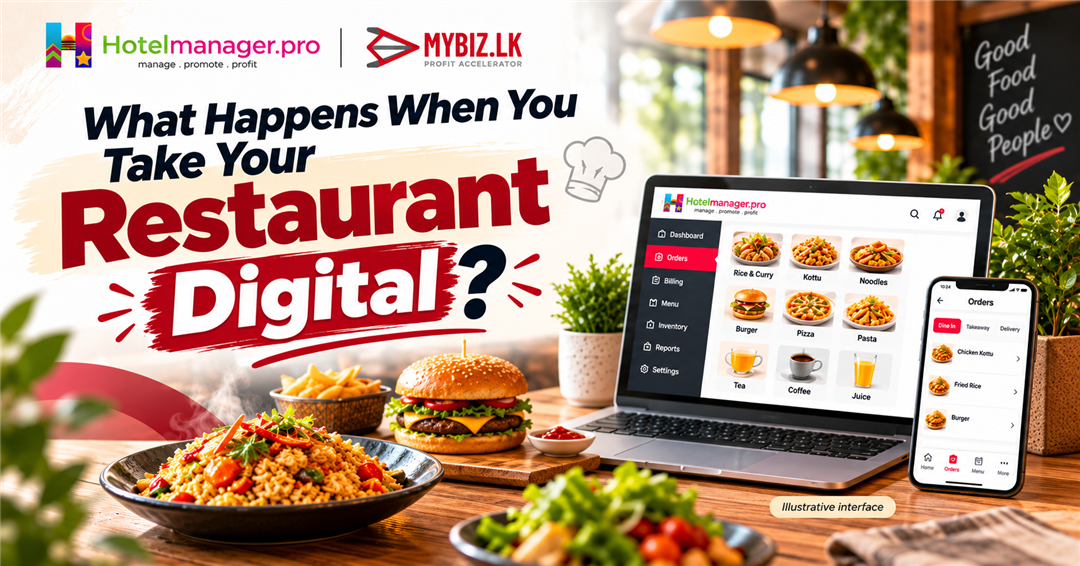
Running a restaurant takes more than great food and friendly service. This article explains how digital order management, POS billing, stock tracking, centralised records and reporting can help organise daily tasks. It also explores what to consider when choosing software and how MyBiz can help you find a solution that fits your restaurant.
5 Ways Restaurant Management Software Can Make Daily Operations Easier
Running a restaurant takes more than delicious food and excellent customer service. Managing orders, preparing bills, tracking ingredients, purchasing supplies, and reviewing sales are all essential parts of the business.
This article explores how digital order management, automated billing, up-to-date stock tracking, centralised management and reporting can help organise your restaurant’s daily operations.
Running a Restaurant Gets More Complicated as You Grow
When your restaurant is small, a notebook or an Excel spreadsheet may be enough to keep things organised.
But as the business grows, you serve more customers, receive more orders, and employ more staff. Managing everything manually can become increasingly difficult.
During a busy lunch or dinner service, even a small mistake can affect the customer experience.
What if you could make these daily tasks easier to manage?
Restaurant management software can help bring more structure to your operations. Here are five key benefits to consider.
1. Keep Customer Orders Organised
Handling customer orders accurately is one of the most important tasks in a restaurant.
Imagine several tables placing orders at the same time. One table orders fried rice, another asks for kottu, and another customer wants to add extra items to an existing order.
If staff write every order in a notebook and pass it to the kitchen manually, mistakes can happen during a busy service. An order may be missed, or the kitchen may receive incorrect information.
A digital order management system can make this process easier.
Staff can enter customer orders into the system. Depending on the software’s capabilities, they can send those orders to the kitchen and update them when changes are needed.
This creates a clearer record of each order and helps staff coordinate their work.
For restaurants handling dine-in, takeaway and delivery orders, an organised order management process can be particularly useful.
2. Make Billing Faster and Easier
Customers expect more than a good meal. They also want efficient service and a straightforward payment experience when they are ready to leave.
During busy periods, preparing bills can become another challenge.
One table may have several items to calculate. Another customer may receive a discount. Working everything out manually takes time and creates opportunities for mistakes.
A POS billing system can help staff prepare bills more efficiently.
The system can calculate totals using the items and prices entered. Depending on its features, it may also support discounts, taxes, and different payment methods.
Each sale can have a digital record.
At the end of the day, the owner can review a sales report instead of collecting individual bills and adding them together manually.
This makes daily sales information easier to access for both staff and management.
3. Get a Clearer View of Your Stock
Stock management needs constant attention in a restaurant.
Rice, vegetables, meat, fish, oil, and spices are used every day, and some ingredients can spoil quickly.
Imagine running out of an ingredient needed for one of your best-selling dishes. You may have to tell customers that the dish is unavailable.
On the other hand, buying more ingredients than you need can lead to spoilage and increased wastage.
Having accurate stock information helps you make better purchasing decisions.
An inventory management system can help track the ingredients and supplies you have available. When incoming stock and usage are recorded correctly, you can review current quantities before placing another order.
In systems that connect inventory with sales and recipes, you may also be able to monitor ingredient usage based on the dishes sold.
For example, before buying tomorrow’s ingredients, you can check what is already in stock and purchase accordingly.
This can help reduce unnecessary purchases and identify potential shortages earlier.
However, accurate stock information depends on accurate records. Staff need to update stock movements correctly, and physical stock should be checked regularly against the system.
4. Bring Important Business Information Together
As a restaurant grows, information often ends up in several different places.
Orders may be recorded in a notebook. Sales may be tracked in an Excel spreadsheet. Stock details may sit in another file, while purchases and expenses are recorded elsewhere.
With information spread across different records, it becomes harder to understand the overall position of the business.
An owner who wants to know today’s sales may need to ask the cashier. To check stock, they may need to review store records. For purchasing information, they may have to speak to another member of staff.
A restaurant management system can bring these activities together.
Orders, billing, inventory, purchasing and reports can be managed through connected processes, reducing the time spent gathering information from different sources.
For businesses with several restaurant branches, software with multi-branch capabilities can also provide information for individual locations.
However, every restaurant has different requirements. A small café may need a simpler setup than a restaurant chain.
The priority is to choose a system that fits your business rather than selecting software simply because it has a long list of features.
5. Understand Sales and Business Performance
A restaurant can be busy every day without earning the profit its owner expects.
Even when sales increase, rising ingredient costs, staff expenses, electricity bills, rent, and other costs can reduce what remains.
Owners therefore need to look beyond sales totals and understand the wider performance of the business.
Calculating everything manually can be time-consuming. Reports and dashboards in restaurant management software can make relevant information easier to review.
Depending on the system and the information recorded, you may be able to see:
-
Daily sales totals.
-
Best-selling food items.
-
Changes in sales compared with previous periods.
-
Cost information that helps assess menu performance.
Menu item profitability is another important consideration.
For example, a burger may be one of your best-selling items. But if its ingredient cost is high, the amount it contributes towards other expenses and profit may be lower than expected.
When accurate recipe costing and relevant expense information are available, it becomes easier to investigate these situations.
That information can support decisions about menu prices, purchasing and other areas of the business.
The aim is to understand how your restaurant is performing, including what it costs to generate those sales.
Is It Time to Digitise Your Restaurant?
Digitising your restaurant does not mean changing everything at once.
Start by identifying the problems you face most often:
-
Is it difficult to keep orders organised?
-
Does billing take too long?
-
Is accurate stock information hard to obtain?
-
Do sales reports take too much time to prepare?
If these problems occur regularly, it may be worth considering restaurant management software.
Before choosing a system, review your restaurant’s size, daily order volume, staff requirements, and budget.
Also consider whether the software is easy to use and whether training and technical support are available.
A suitable system should fit the way your restaurant operates and support the people using it every day.
How MyBiz ERP Can Help
We understand how important it is to keep a restaurant’s daily operations organised.
MyBiz ERP is a software brand introduced by Csquare Technologies, focused on providing management software solutions for different business requirements.
If you are looking for a solution to organise your restaurant’s orders, billing, stock and reporting, speak to our team about your needs.
Together, we can discuss the relevant software features and how they could be implemented in your business.
Give Your Restaurant a More Organised Way to Work
A restaurant’s success depends on delicious food, good customer service, and the daily work that supports both.
Handling orders accurately, simplifying billing, keeping track of stock and understanding sales performance can make a meaningful difference to your operations.
If you are planning the next stage of your restaurant’s growth, digital management is a practical step to consider.
Contact us to explore a restaurant management solution that fits your business.
Website: www.mybiz.lk
Email: [email protected]
Phone: 077 772 1122
MyBiz ERP | Profit Accelerator
About Us
At Csquare Technologies (MyBiz.it.com), we help businesses streamline operations with AI-powered automation. With over 15 years of ERP and automation expertise, we’ve transformed workflows across finance, construction, retail, and hospitality. If your organization still spends valuable time on repetitive tasks, it’s time to change.
👉 Consult us today to discover how our AI solutions can save you time, reduce costs, and accelerate profits.
Need help automating your business?
Book a free consultation—roadmap, cost savings, and automation checklist tailored to your business.
Call +94 777 721122 WhatsApp